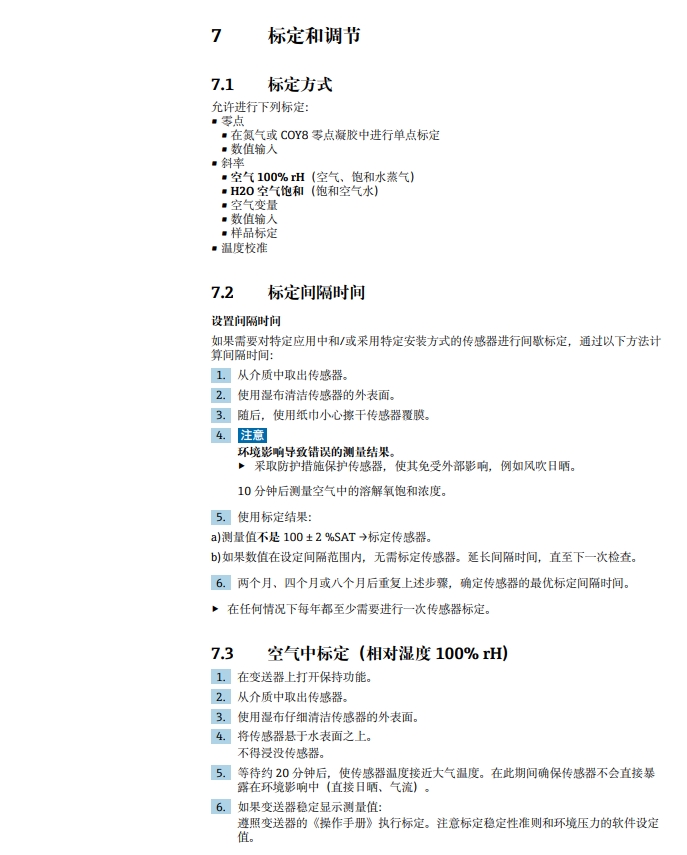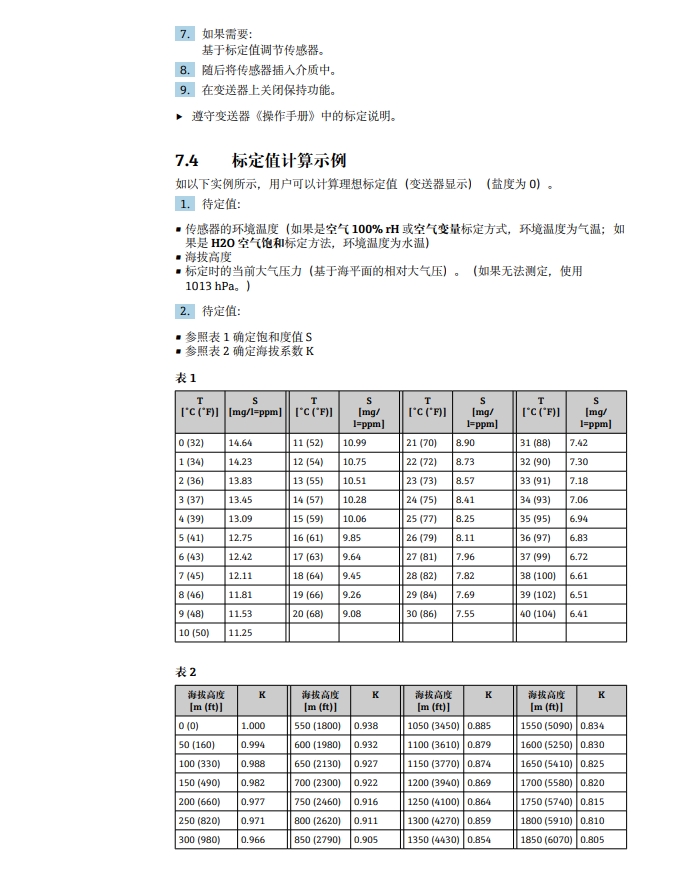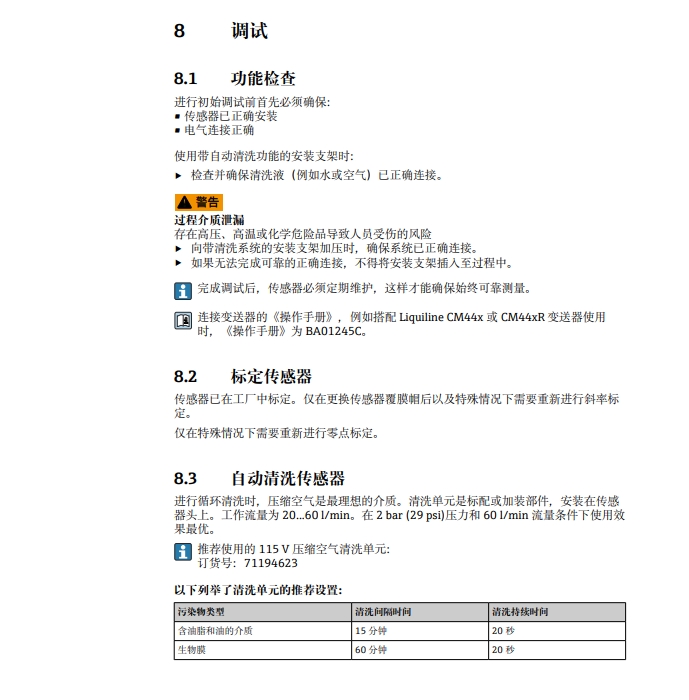
COS61D can be carried out by the following steps:
1. Prepare the tools and equipment required for calibration, such as calibration container, stirrer, burette, electrode holder, etc.
2. Place the COS61D sensor in the calibration container, ensure that the sensor is in good contact with the water surface, and fix the agitator
3. Select the appropriate standard solution for calibration according to the needs. The standard solution can be pure water, buffer solution or salt solution with known concentration. 4. Pour the standard solution into the calibration container and start the agitator to mix the solution evenly.
5. Use a burette to add a known amount of standard solution to the calibration container, and record the added volume and the corresponding potential value. 6. Calculate the response slope, intercept and response time of the sensor according to the potential value and the known dissolved oxygen concentration
7. Repeat the above steps multiple times to get more accurate results
8. In the process of calibration and debugging, it is necessary to observe and record the changes of various parameters, so that problems can be found and solved in time.
9. After the calibration and debugging, the results need to be verified and confirmed to ensure that the sensor can work normally and accurately measure the required parameters.
It should be noted that the specific calibration and debugging calibration steps may vary depending on the sensor model and manufacturer. Therefore, in actual operation, it is recommended to refer to the sensor instruction manual or consult professional technicians to ensure accuracy and reliability.