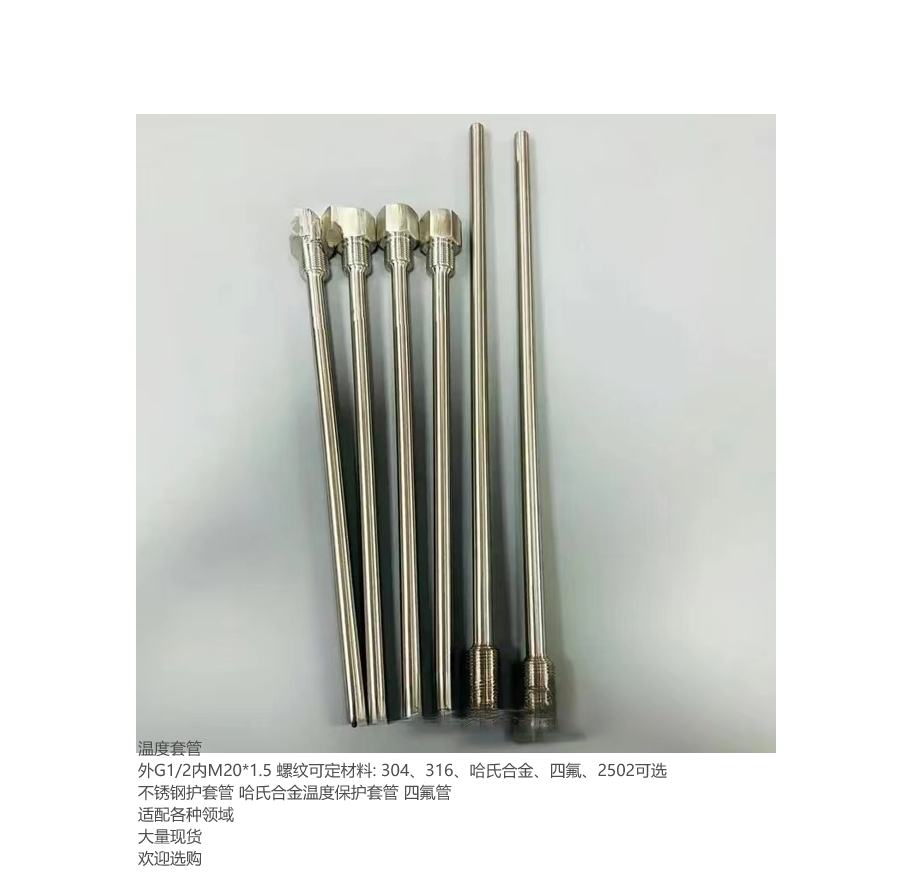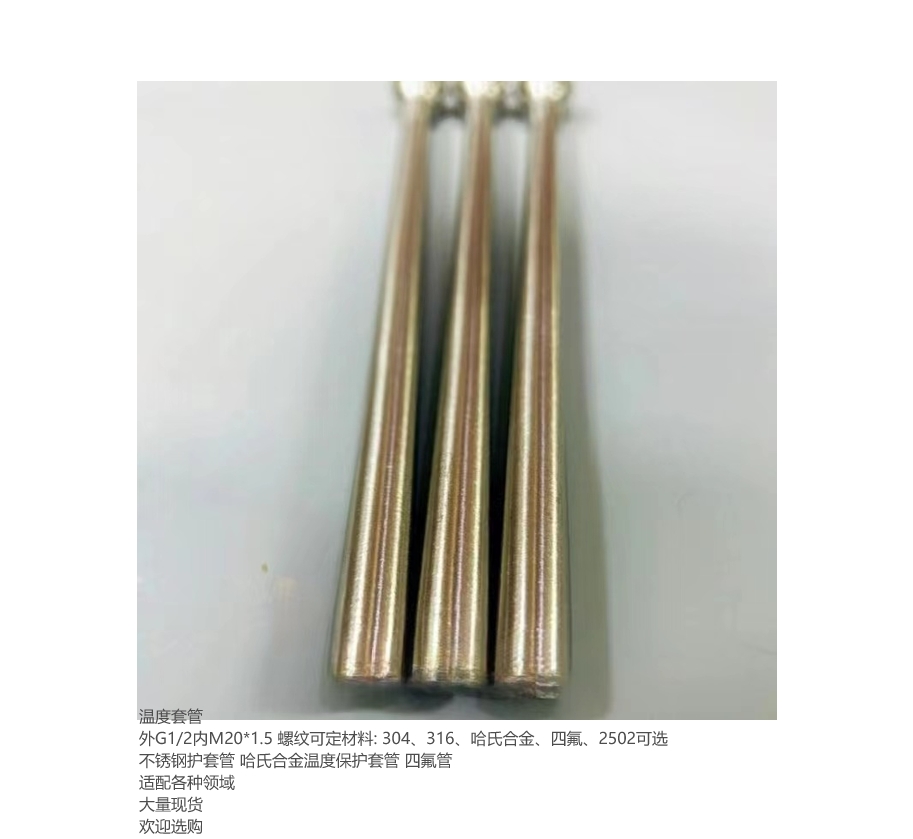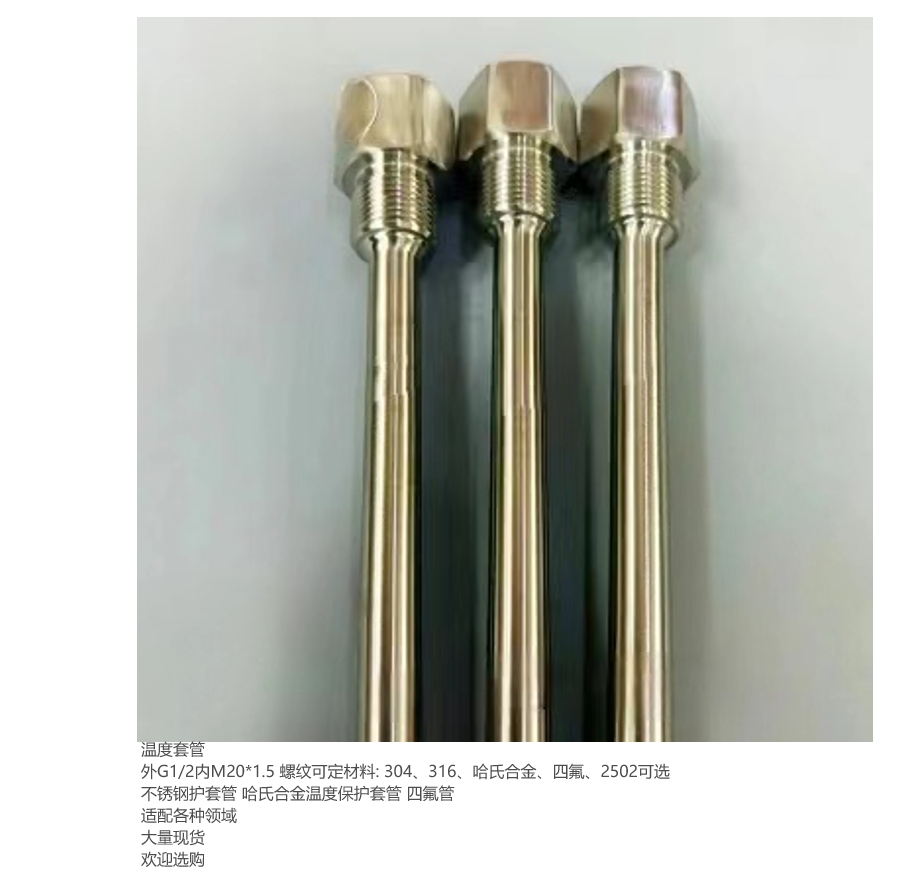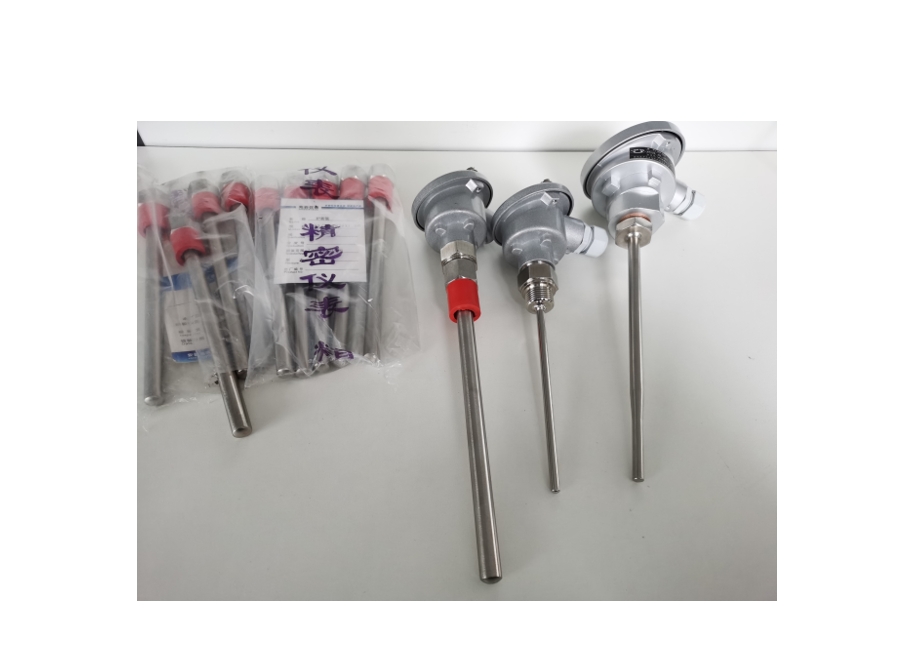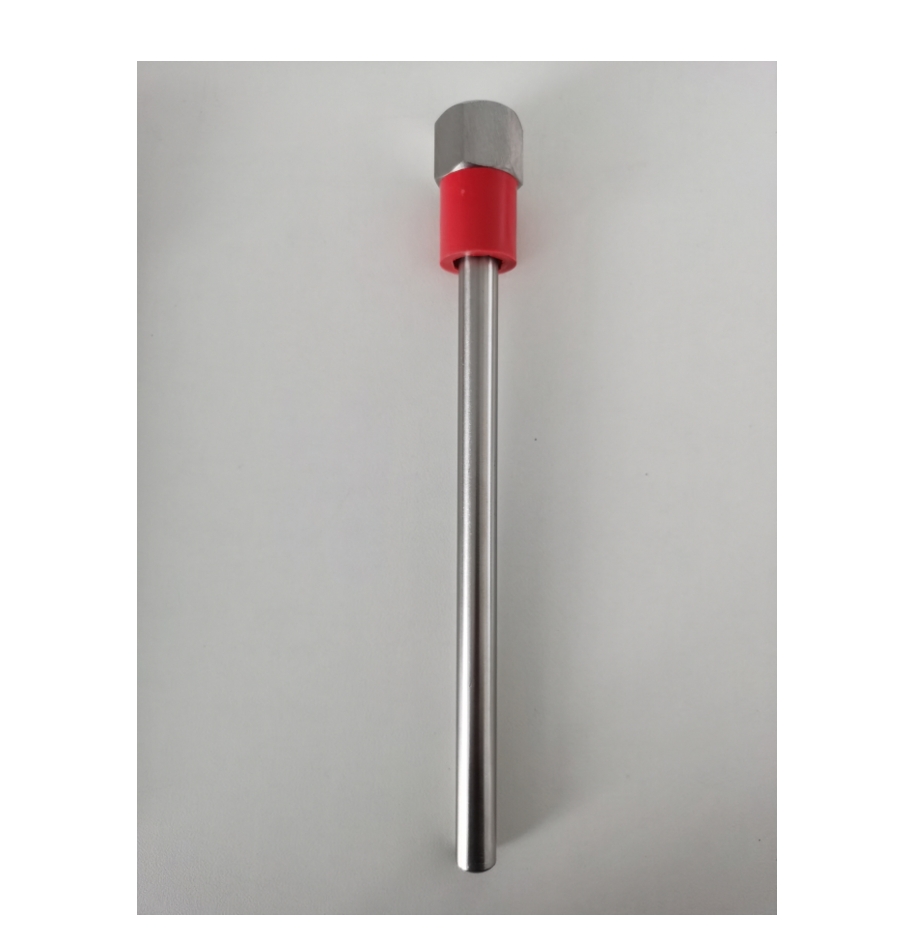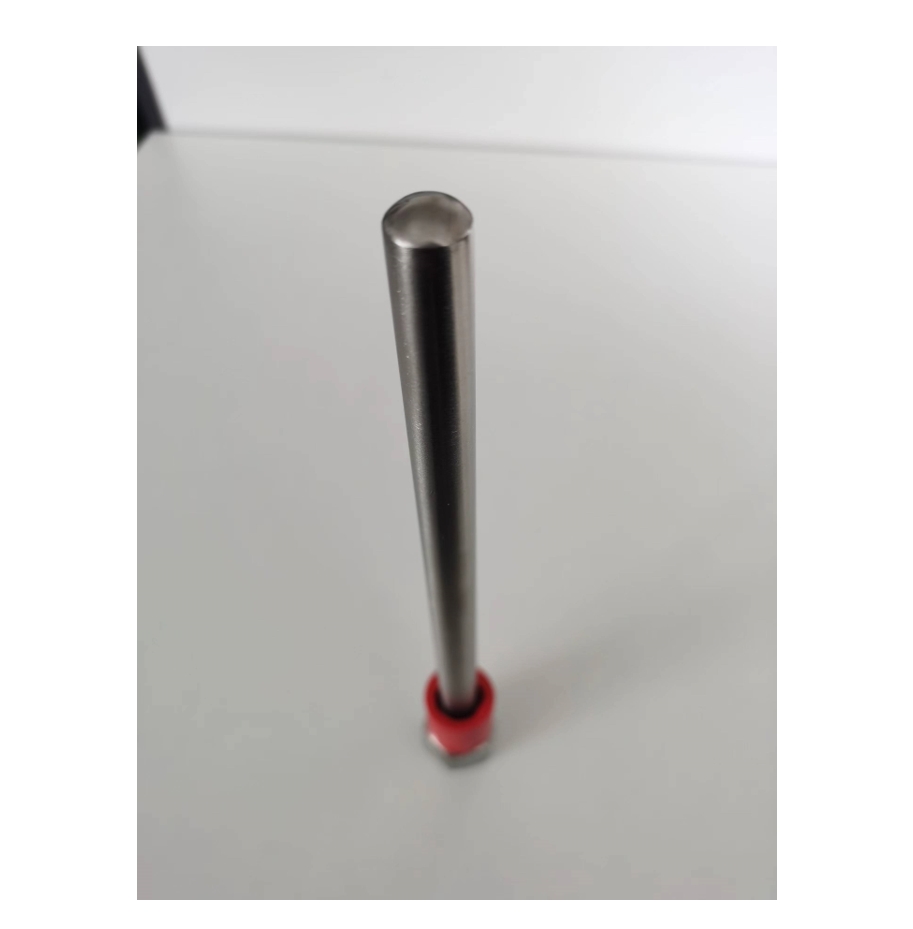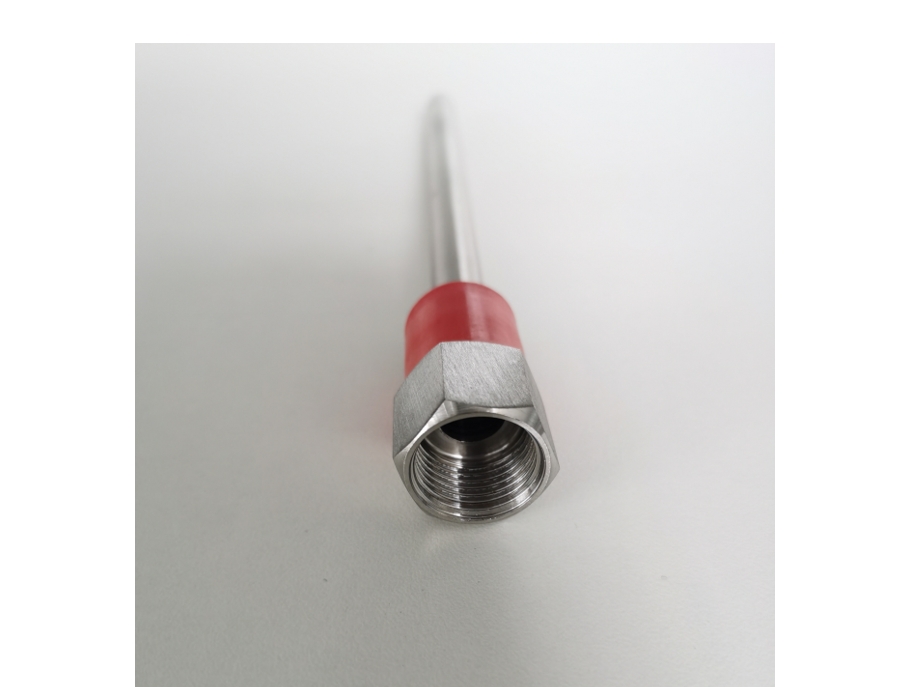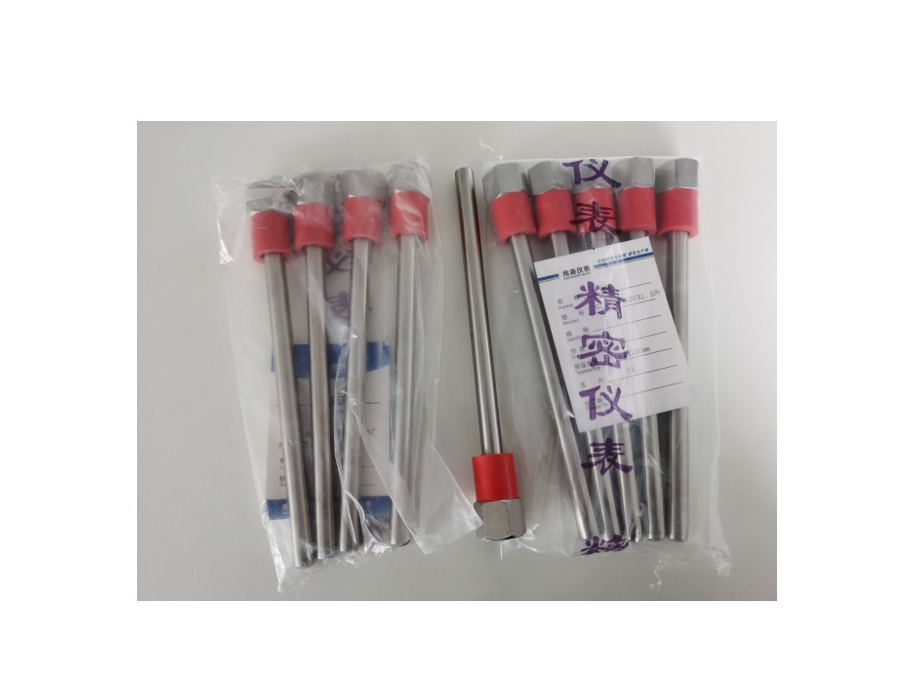
Thermowell Selection Plug-in Thermowell G1/2 M20 * 1.5
Nominal pressure: generally refers to at room temperature, the protection tube can withstand the static external pressure without rupture. Allowable working pressure is not only related to the material, diameter and wall thickness of the protective tube, but also related to its structural form, installation method and the flow rate and type of the measured medium.
Hydrostatic test: when the pressure resistance and leakage inspection of the protection pipe are required, the protection pipe must be tested. The test pressure is 15 times of the pressure resistance level of the protection tube. Xie line flaw detection test: when there are requirements for the inspection of the wall thickness, eccentricity and other items of the protection tube, the inspection shall be carried out according to the user's requirements.
Thermometer protection sleeve is a device used to protect the thermometer from damage and contamination. Thermometer protective sleeves of different models and specifications are suitable for different thermometers and measurement needs. The following are some common thermometer protection casing models and specifications:
1. Diameter specifications: Common diameter specifications include medium 3x 500, medium 4x 500, medium 5x 400, medium 6x 600, etc. These specifications indicate the diameter and length of the protective sleeve, and the appropriate protective sleeve is selected according to the diameter and length of the thermometer used.
2. Material: Common materials include alloy steel, stainless steel, copper and aluminum. These materials have different characteristics and scope of application, such as high temperature resistance, corrosion resistance, durability, easy cleaning, etc. Choosing the right material can ensure the service life and accuracy of the thermometer protective casing.
3. Maximum temperature: Different materials of protective sleeves have different maximum temperatures, such as the maximum temperature of alloy steel is 800 °, the maximum temperature of stainless steel is 600°C, the maximum temperature of copper is 400°C, and the maximum temperature of aluminum is 300°C. Choosing the appropriate maximum temperature can ensure the safe use of the thermometer protective sleeve.
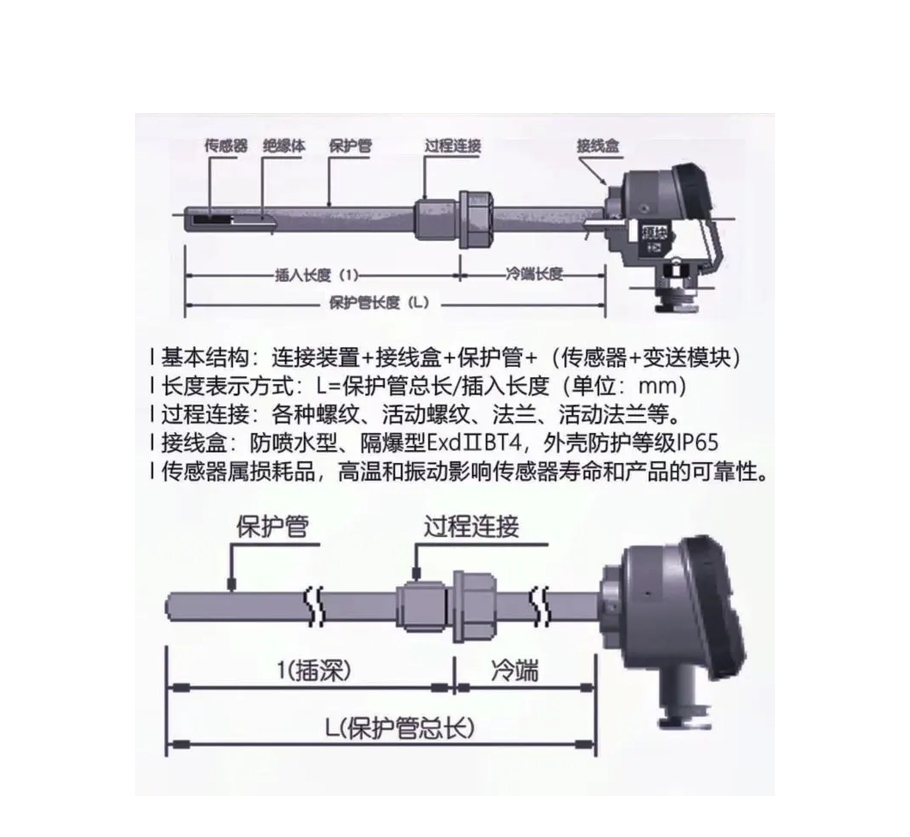
plug-in thermowell is a measuring device used to measure the internal temperature of pipes, equipment or containers. The following is a detailed description of the appearance, size, selection, application scenarios, precautions and maintenance of the plug-in thermowell:
1. Appearance size: The plug-in thermowell is usually made of stainless steel or copper, and the appearance size varies with the model. Common sizes include diameters of medium 16mm, medium 22mm, medium 34mm, etc., and lengths of 300mm, 500mm, 1000mm, etc. In addition, there are special types such as plug-in thermal resistance protective sleeves and waterproof sleeves
2. Selection: When selecting the plug-in thermowell, you need to select the appropriate model according to the measurement requirements. For example, when measuring high temperature, high temperature resistant stainless steel should be selected, and when measuring corrosive media, corrosion resistant stainless steel or copper should be selected. In addition, factors such as the length of the sleeve, the connection method, and the size of the interface need to be considered.
3. Application scenario: Plug-in thermowell is widely used in chemical, petroleum, pharmaceutical, food and other industrial fields. It can measure the temperature inside pipes, equipment or containers, help companies monitor temperature changes in the production process, and ensure product quality and production safety
4. Precautions: When installing and using the plug-in thermowell, you need to pay attention to the following points. First of all, ensure that the casing is inserted to a proper depth and can contact the measured medium; secondly, ensure that the casing and the pipeline or equipment are well sealed to avoid air or liquid leakage. Third, check whether the casing is worn or damaged regularly. If necessary, replace it in time. Finally, clean the inside of the casing regularly to prevent dirt or impurities from affecting the measurement accuracy. 5. Maintenance: For the maintenance of plug-in thermowell, it is recommended that the following work be carried out on a regular basis. First, check whether the appearance of the casing is worn or deformed. If there is a problem, it should be replaced in time. Second, check whether the sealing performance of the casing is good. If there is a problem, it should be dealt with in time. Third, clean the inside of the casing regularly and keep it clean: Finally, Regularly calibrate the measurement accuracy of the casing according to actual usage
In short, choosing the right plug-in thermowell is essential for temperature measurement. Understanding its appearance size, selection, application scenarios, precautions and maintenance knowledge can help you better choose and use it.
In addition to the above specifications, there are some special thermometer protective sleeves, such as waterproof type, high pressure resistant type, etc., which are suitable for special use environment and measurement requirements. When selecting thermometer protective sleeves, they need to be selected according to the specific use environment and measurement requirements., To ensure the safe use and accurate measurement of the thermometer
For more information, it is recommended to consult the relevant experts or consult the product manual
a lot of in stock
Welcome to buy
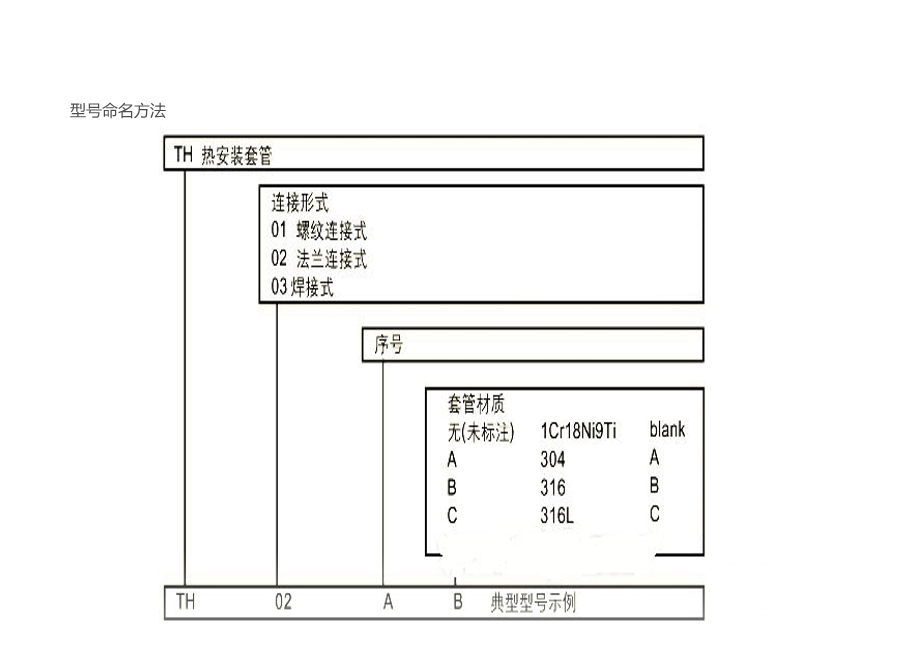
Model Naming Method