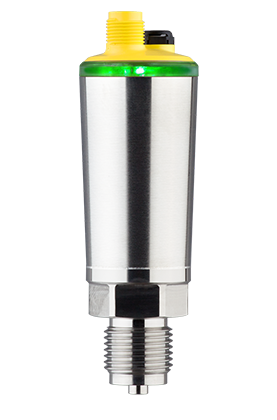
VEGAPULS 31 | PS31.XXXXXGMHB
PS31.XXXXXGMHB VEGA radar level gauge application range
VEGAPULS31 are ideal sensors for simple non-contact level measurement. It is very suitable for water treatment industry, storage tanks of acid, alkali and additives in various industrial industries, or to penetrate the wall of plastic containers to measure the level.
Product Details
VEGAPULS 31 compact radar sensor for continuous level measurement 4 ... 20 mA HART output, measuring range 15 m, measuring accuracy ± 2mm, local display and 3 adjustment keys
Vegapuls 31
VEGAPULS 31 is the ideal radar sensor for non-contact level measurement of liquids and bulk materials in simple applications. It is particularly suitable for water treatment applications, storage tanks in all industries or for level measurement through plastic tanks. For solids, it is used for small silos or open tanks. Accurate measurement field display independent of product, process and environmental conditions, easy level control 80GHz wireless radar technology, maintenance-free operation Connection size 1.5 inches (40)
Degree of protection (IP)IP68
Maximum working pressure 3 bar at 20°C
Supply voltage 24V DC
Methods of measurement Other
VGARA222229
PS31.XXXXXGMHB
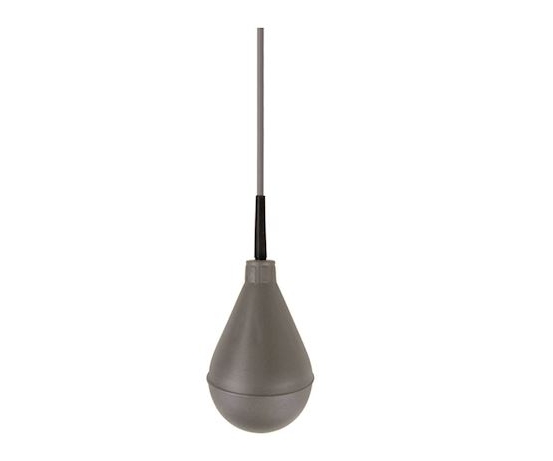
VEGAFLO XL is an extremely sturdy self-weight liquid level detector, which is very suitable for heavy wastewater applications, where a thick grease layer is sometimes formed on the surface. Cable length 6 m
VEGAFLO XL-Self-weight liquid level bulb for slurry, length 6m, changeover contact output
1. PS31.XXXXXNMHB (note: "GMHB" in the original text may be a clerical error or suffix of a specific model, while "XXXXX" usually represents a specific model code or serial number, and here we use "XXXXX" instead to highlight its variability) The parameters of VEGA radar level gauge may vary according to the specific model and configuration, but based on the general characteristics and publicly released information of VEGA radar level gauge, here is an overview of some possible parameters:
Basic technical parameters
Model: PS31.XXXXXNMHB (specific model code or serial number may vary)
Brand: VEGA
Measuring range: usually up to 15 meters (the specific range may vary by model)
Measurement accuracy: ± 2mm (this is the typical accuracy of the VEGAPULS 31 series radar level gauge)
Frequency: 80GHz (high-frequency radar technology, providing non-contact measurement)
Launch angle: 8 ° (divergence angle of radar beam)
Physical and connection parameters
Liquid material: PVDF (polyvinylidene fluoride, a corrosion resistant, high temperature resistant material)
Threaded connections: may include standard threaded connections such as G1 ½, 1 ½ NPT, R1 ½, etc. (depending on model and configuration)
Sealing material: FKM (fluorine rubber, a sealing material that is resistant to oil, temperature and chemical corrosion)
Housing material: plastic (usually weather-resistant, corrosion-resistant industrial plastic)
Protection level: IP66/IP67,Type 4X (provides high level of dust and water protection)
Electrical and output parameters
Output signal: 4-20mA/HART (a commonly used industrial process control signal, supporting digital communication and analog signal output)
Power supply voltage: usually 24V DC (the specific voltage may vary by model)
Operating temperature:-40°C to 80°C (the specific temperature range may vary depending on the model and configuration)
Working pressure:-1 to 3 bar (specific pressure range may vary by model)
Other features
Non-contact measurement: without direct contact with the measured medium, to avoid the impact of changes in the characteristics of the medium on the measurement accuracy.
Maintenance-free operation: reasonable design, stable operation, no frequent maintenance.
On-site display: Some models may be equipped with a local display and operation module to facilitate users to view measurement data and set parameters at any time.
Precautions
As the PS31.XXXXXNMHB is a more generic model description, specific parameters may vary depending on the model and configuration.
Before purchase and use, please be sure to contact VEGA or its authorized agent for the most accurate and up-to-date product information and technical support.
In summary, the PS31.XXXXXNMHB VEGA radar level gauge is a high-performance, high-reliability level measuring instrument, suitable for various industrial level measurement scenarios. Its non-contact measurement technology, high-frequency radar technology, and a variety of physical and electrical connection options provide users with convenient and accurate level measurement solutions.
two, PS31GMHB VEGA radar level gauge is a high-performance level measuring instrument, the following is a detailed introduction:
Product overview
PS31GMHB is a radar level gauge model launched by VEGA, which belongs to the VEGAPULS 31 series. The radar level gauge uses non-contact measurement technology and is suitable for level measurement of various liquids and bulk materials. Its compact design and easy operation make it ideal for industrial level measurement.
Technical features
Measuring range: The measuring range of the PS31GMHB radar level gauge can reach 15 meters, which can meet the needs of most industrial level measurement.
Measurement accuracy: The measurement accuracy of the radar level gauge is ± 2mm, which ensures the accuracy and reliability of the measurement.
Non-contact measurement: using 80GHz high-frequency radar technology, without direct contact with the measured medium, to avoid the impact of changes in the characteristics of the medium on the measurement accuracy.
Maintenance-free operation: reasonable design, stable operation, no frequent maintenance, reducing the cost of use.
On-site display: equipped with local display and operation module, convenient for users to view measurement data and set parameters at any time.
Applicable Scenarios
three, PS31GMHB VEGA radar level meter is widely used in the following scenarios:
Water treatment industry: used to measure the liquid level of various pools and water tanks to ensure the normal operation of the water treatment process.
Industrial storage tank: It is suitable for measuring the level of acid, alkali, additives and other industrial storage tanks to ensure the safe operation of the storage tank.
Through the plastic container wall measurement: can penetrate the plastic container wall for level measurement, suitable for the scene to maintain the integrity of the container.
use and maintenance
Installation: According to the measurement requirements and site conditions, select the appropriate installation location and method. Ensure that there is no obstruction between the radar level gauge and the measured medium to ensure measurement accuracy.
Debugging: After the first power-on, set the parameters according to the debugging steps. This includes selecting the language, setting the range, maximum (full) and minimum (empty) values.
Maintenance: Regularly check the working status of the radar level gauge to ensure its normal operation. If there is any abnormality, contact the manufacturer or professional maintenance personnel for treatment in time.
Price and Purchase
The price of PS31GMHB VEGA radar level gauges varies depending on factors such as quantity purchased, specifications selected, and merchant promotions. It is recommended that users negotiate offline with merchants to obtain the best price and purchase plan. At the same time, choose regular channels to buy to ensure product quality and after-sales service.
In summary, the PS31GMHB VEGA radar level gauge is a high-performance, high-reliability level measuring instrument, suitable for various industrial level measurement scenarios. Its non-contact measurement technology, maintenance-free operation and on-site display function provide users with convenient and accurate level measurement solutions.
PS31.XXXXXNMHB (Note: "GMHB" in the original text may be a clerical error or a suffix of a specific model, while "XXXXX" usually represents a specific model code or serial number. Here we use "XXXXX" instead to highlight its variability) The parameters of VEGA radar level gauge may vary depending on the specific model and configuration, but based on the general characteristics and publicly released information of VEGA radar level gauge, here is an overview of some possible parameters:
The working principle of the radar level gauge is based on the mode of transmission-reflection-reception, which is explained as follows:
Radar level gauge is a measuring instrument based on the principle of time travel. It uses radar waves (a special form of electromagnetic waves) to detect the level. Radar waves travel at the speed of light, and their physical properties are similar to those of visible light. The speed of propagation is equivalent to the speed of light, and the frequency range is 300MHz to 3000GHz. The radar level gauge transmits radar signals in the form of a beam through an antenna. These signals will be reflected when they encounter the surface of the measured medium and are received by the receiver of the radar level gauge.
After receiving the reflected signal, the receiver converts it into an electrical signal and processes it through a signal processor. The processor calculates the distance from the sensor to the surface of the medium according to the running time (I. e. time delay) of the radar wave from transmission to reception. This distance is proportional to the height of the material level and can be calculated by the formula h = H-vt/2, where h is the height of the material level, H is the total height of the tank or container, v is the velocity of the radar wave (the speed of light), and t is the interval between the emission and reception of the radar wave.
The radar level gauge can penetrate the space steam, dust and other interference sources, and is easy to be reflected when encountering obstacles. The better the conductivity of the measured medium or the greater the dielectric constant, the better the reflection effect of the echo signal. Therefore, the radar level gauge is suitable for various media, including liquid, solid and powder.
In addition, the radar level meter also has some special application considerations. For example, when measuring solid materials, because the solid medium will have a pile angle, the sensor needs to be tilted at a certain angle; in order to avoid false reflection, try to avoid the device that causes false reflection in the emission angle, and select the appropriate installation position.
In summary, the radar level gauge measures the level height by transmitting radar waves and receiving their reflected signals. Its working principle is simple and reliable, and it is suitable for various media and measurement environments.
PS31.XXXXXNMHB (note: "XXXXX" here represents the specific model code or serial number, and "NMHB" may be the suffix of a specific model, the actual product model may be different) radar level gauge, the following is a detailed analysis of its appearance description, size, application scenarios and maintenance precautions:
IV, Appearance Description
The PS31.XXXXXNMHB radar level gauge is usually of compact design with a simple and elegant appearance. Its main part is made of high-quality industrial plastic or metal materials, with excellent corrosion resistance and weather resistance. The antenna part is usually made of special materials to ensure stable transmission and reception of radar signals. The surface of the whole instrument is smooth, without obvious protrusion or depression, which is convenient for cleaning and maintenance.
Dimensions
As the PS31.XXXXXNMHB is a more generic model description, specific dimensions may vary by model and configuration. However, based on the general characteristics of the VEGA radar level gauge, we can speculate that its size is roughly as follows (the specific size is subject to the actual product):
Length: usually more compact, suitable for installation in a variety of limited space.
Diameter: Depending on the size and shape of the antenna, the diameter may vary, but it is generally moderate to ensure good measurement results and stability.
Installation size: Provide standard installation interface and size, which is convenient for users to install and debug according to site conditions.
Application Scenarios
PS31.XXXXXNMHB radar level gauge is widely used in various industrial level measurement scenarios, including but not limited:
Water treatment industry: used to measure the liquid level of various pools and water tanks to ensure the normal operation of the water treatment process.
Chemical industry: It is suitable for measuring the level of chemical storage tanks such as acid, alkali and additives to ensure the safe operation of storage tanks.
Petroleum and petrochemical industry: used to measure the liquid level and boundary of oil tanks, gas tanks and other storage tanks to provide accurate data support for production.
Power industry: in the ash warehouse, coal bunker and other scenarios to measure the level, for power production to provide important parameters.
Other industrial areas: such as food, pharmaceutical, paper and other industries, but also widely used radar level meter level measurement.
Maintenance Considerations
In order to ensure the long-term stable operation of the PS31.XXXXXNMHB radar level gauge, the following are some maintenance precautions:
Regular inspection: Regularly check the working status of the radar level gauge to ensure its normal operation. If there is any abnormality, contact the manufacturer or professional maintenance personnel for treatment in time.
Clean the antenna: Clean the antenna part regularly to prevent dust, dirt and other impurities from affecting the transmission and reception of radar signals.
Prevent collision: During installation and use, avoid collision or extrusion of the radar level gauge, so as not to damage the instrument or affect the measurement accuracy.
Pay attention to the environment: ensure that the radar level meter is installed in a suitable environment to avoid the influence of high temperature, high humidity, strong magnetic field and other interference factors.
Calibration and debugging: According to actual needs, the radar level gauge is regularly calibrated and debugged to ensure its measurement accuracy and stability.
In summary, the PS31.XXXXXNMHB radar level gauge has a compact appearance, moderate size, a wide range of application scenarios, and detailed maintenance precautions. Users should choose the appropriate model and configuration according to the actual situation, and follow the maintenance precautions to ensure its long-term stable operation.
PS31.XXXXXNMHB (where "XXXXX" represents the specific model code or serial number) as a VEGA radar level gauge, the installation method usually follows the following steps and precautions:
1. Preparation before installation
On-site inspection:
Observe whether the field conditions are suitable for the application of this type of radar level gauge.
Confirm if the installation position is appropriate, make sure that the radar beam can be reflected back to the radar antenna accurately, and reduce the interference wave reflected by the interference object.
Read the instructions:
Read the product manual carefully to understand the technical specifications, installation requirements, debugging steps, etc.
2. Tool preparation:
Prepare necessary installation tools, such as screwdrivers, wrenches, electric drills, etc.
Installation location selection
Measurement range:
According to the type and measurement range of the measured medium, select the appropriate installation position.
Avoid interference:
Avoid locations where spurious reflections may occur, such as feed ports, stirrers, vortices, etc.
Make sure that there are no obstructions in the microwave beam angle of the antenna.
Antenna vertical:
For liquid measurements, the antenna should be perpendicular to the surface of the measured medium.
For solid measurement, since the solid medium will have a stack angle, the sensor may need to be tilted at a certain angle, but the specific tilt angle should be determined according to the actual situation.
Distance requirements:
The distance between the equipment and the tank wall must be at least the specified value (e. g. 200mm or more, depending on the model and container size).
For tanks with arched tops, the equipment should not be installed in the center.
3. Installation steps
Fixed flange:
If flange mounting is used, align the flange of the radar level gauge with the flange of the container and secure with bolts and nuts.
Ensure a good seal between the flanges to prevent media leakage.
Nozzle Installation:
If a nozzle is used for installation, extend the antenna from the nozzle and ensure that the length of extension is as specified (e. g. at least 10mm).
Use a suitable sealing material (such as fluorine rubber) for sealing to prevent the medium from entering the nozzle.
Adjust the antenna:
Use the gimbal of the instrument to adjust the direction of the horn antenna so that the angle between the antenna and the measured medium level is as vertical as possible.
This can increase the intensity of the echo and improve the measurement accuracy.
Cable connection:
Connect the cable of the radar level gauge to the control system or display instrument.
Ensure that the cable connection is secure and reliable, and that the cable is not squeezed or pulled.
4. Commissioning and inspection
Power-on check:
After power-on, observe whether the level gauge enters step by step according to the normal start-up procedure and displays normally.
Connection software:
By connecting the corresponding software (such as GDPF software), observe the linearity and measurement accuracy of the level meter.
Adjust and optimize as needed.
On-site commissioning:
The actual measurement is carried out on site to observe whether the measurement data is accurate and stable.
If found abnormal, timely adjustment and calibration.
5. Maintenance and Maintenance
Periodic inspection:
Regularly check the working status of the radar level gauge to ensure its normal operation.
If there is any abnormality, contact the manufacturer or professional maintenance personnel for treatment in time.
To clean the antenna:
Regularly clean the antenna part to avoid dust, dirt and other impurities affecting the transmission and reception of radar signals.
Collision avoidance:
During installation and use, avoid collision or extrusion of the radar level gauge, so as not to damage the instrument or affect the measurement accuracy.
In summary, the installation method of PS31.XXXXXNMHB radar level gauge includes preparation before installation, selection of installation location, installation steps, debugging and inspection, and maintenance and maintenance. The user should install and debug in strict accordance with the product manual and installation requirements to ensure its long-term stable operation and accurate measurement.